Yes, cloudy headlights can fail a Massachusetts inspection even when both bulbs work. The state’s inspection rule regulates the lens itself, not just the bulb behind it, and heavy oxidation is exactly the kind of defect it describes. Here’s what the rule actually says, what happens if you get rejected, and how to take the question off the table before your sticker month.
What does the inspection rule actually say?
540 CMR 4.04 sets the standards for the annual Massachusetts Vehicle Check. On lighting, it requires every lighting device the vehicle came with to be operable and to work the way it was designed to. And it’s specific about lenses: they must be intact, clean, unobstructed, and free from cracks. A lens hazed over with oxidation is scattering light instead of passing it, which is the opposite of clean and unobstructed. The rule even bans fixing a lens with adhesive tape.
Will haze alone actually get you rejected?
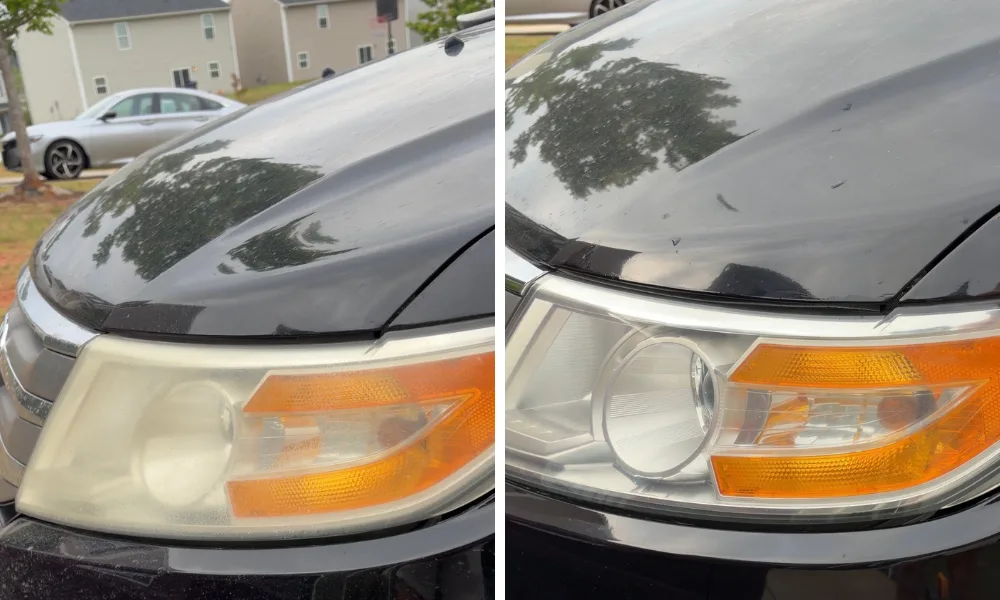
It can, and the deciding factor is how bad the haze is and who’s holding the flashlight. Light surface haze usually passes. A lens that’s visibly yellow or chalky, throwing a dull glow instead of a beam, is an inspector’s judgment call you don’t control. Some stations wave it through for years, then a different station or a different inspector writes it up. If your lenses look boiled in daylight, you’re gambling on the call every October.
Restoration removes the gamble. After the oxidized layer is gone and the lens is optically clear, there’s nothing for an inspector to flag. To be straight with you: we restore lenses, we don’t issue stickers, and nobody honest can promise you a pass. What we can promise is that your lenses won’t be the reason you fail.
What happens if you fail?
You get a rejection sticker instead of a pass, and the clock starts. You have 60 days to fix the problem and get the vehicle retested, with a free retest at the station that failed you. Driving around on a rejection sticker past the repair window is its own violation, and the black R on your windshield is visible to every officer you pass. Compared to that hassle, an hour of restoration in your driveway is the easy path.
What about on the road, outside inspection season?
Massachusetts law works your headlights harder than most states. MGL Chapter 85 Section 15 requires headlights and taillights from a half hour after sunset to a half hour before sunrise, whenever you can’t see people or vehicles 500 feet ahead, and whenever your wipers are running. Rain, snow, fog, and December afternoons all count. A ticket for it won’t surcharge your insurance, but it’s still a stop and still a fine, and a hazed lens is dim exactly when the law says it has to be working.
The bigger risk: liability after a crash
A rejection sticker costs you a repair and a retest. Degraded headlights after a night crash can cost much more. Beam performance is a documented factor in crash reconstruction, and visibly oxidized lenses photograph badly after the fact. If the other side’s attorney can show your equipment was visibly defective, that becomes their story. Nobody buys headlight restoration hoping to win a lawsuit, but it’s worth knowing what a $269 fix insures against.
How do you fix it before sticker month?
Restore the lenses, properly, once. Our full restoration removes the oxidized layer completely with grit matched wet sanding and bonds a ceramic UV barrier to the polycarbonate, returning the clear, focused beam the lens had from the factory. We come to you anywhere in Greater Boston, day or night, and it’s restored or it’s free.